"We had great time the food was great The guide was great and we loved it Thanks"
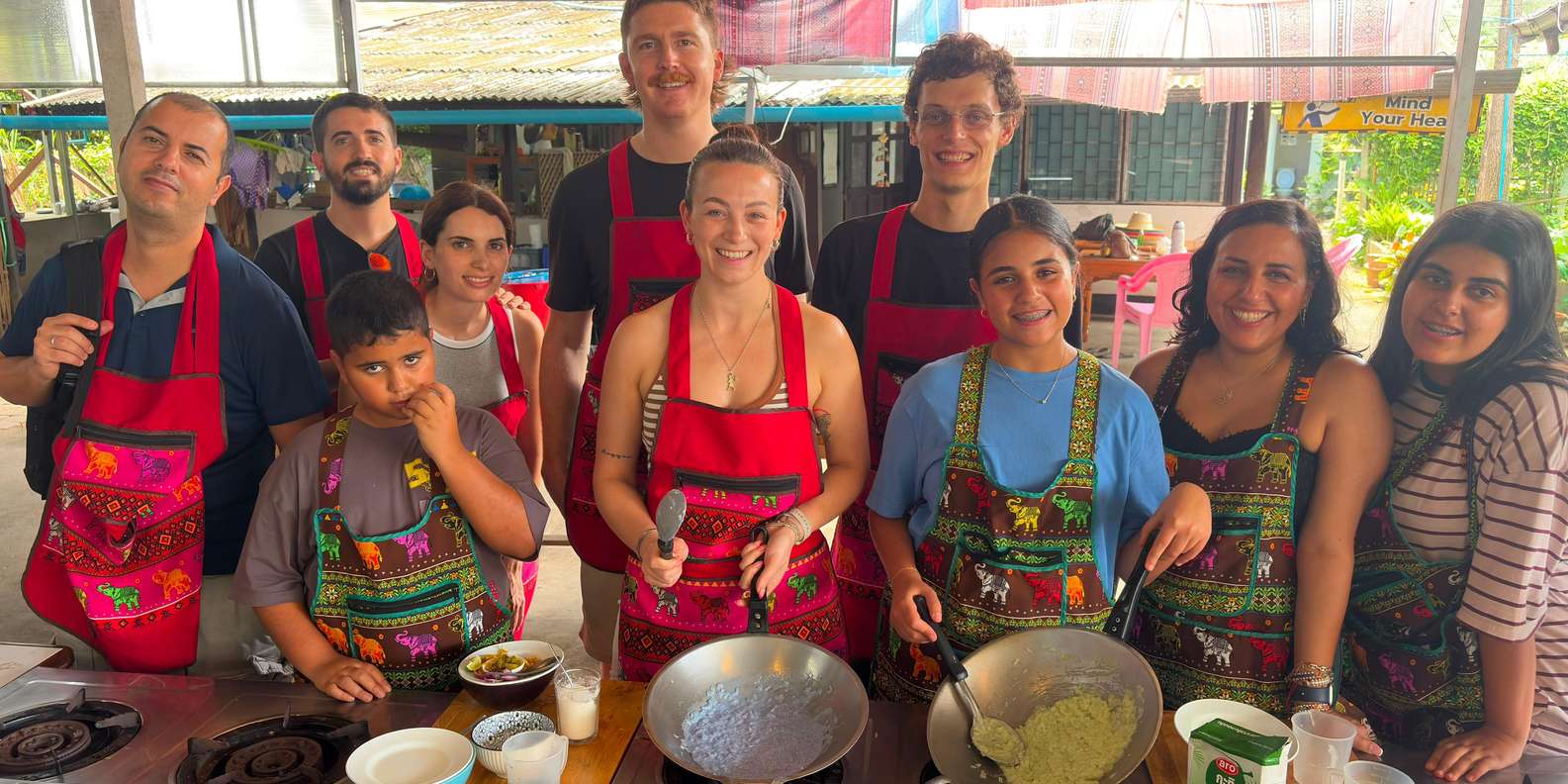
Half or Full Day · Market Tour Included · From $24
A Chiang Mai cooking class is one of the best-value things you can do anywhere in Southeast Asia: four to six dishes you cook yourself, a market walk to buy the ingredients, usually a farm, usually lunch, and a recipe book to take home — for about the price of two cocktails at home. The difficulty is not finding a good one. It is that there are thirty of them and they all have five-star ratings.
The Experience
From the operator's listing. In this market the differences are the market tour, the farm, and how many dishes you actually cook.
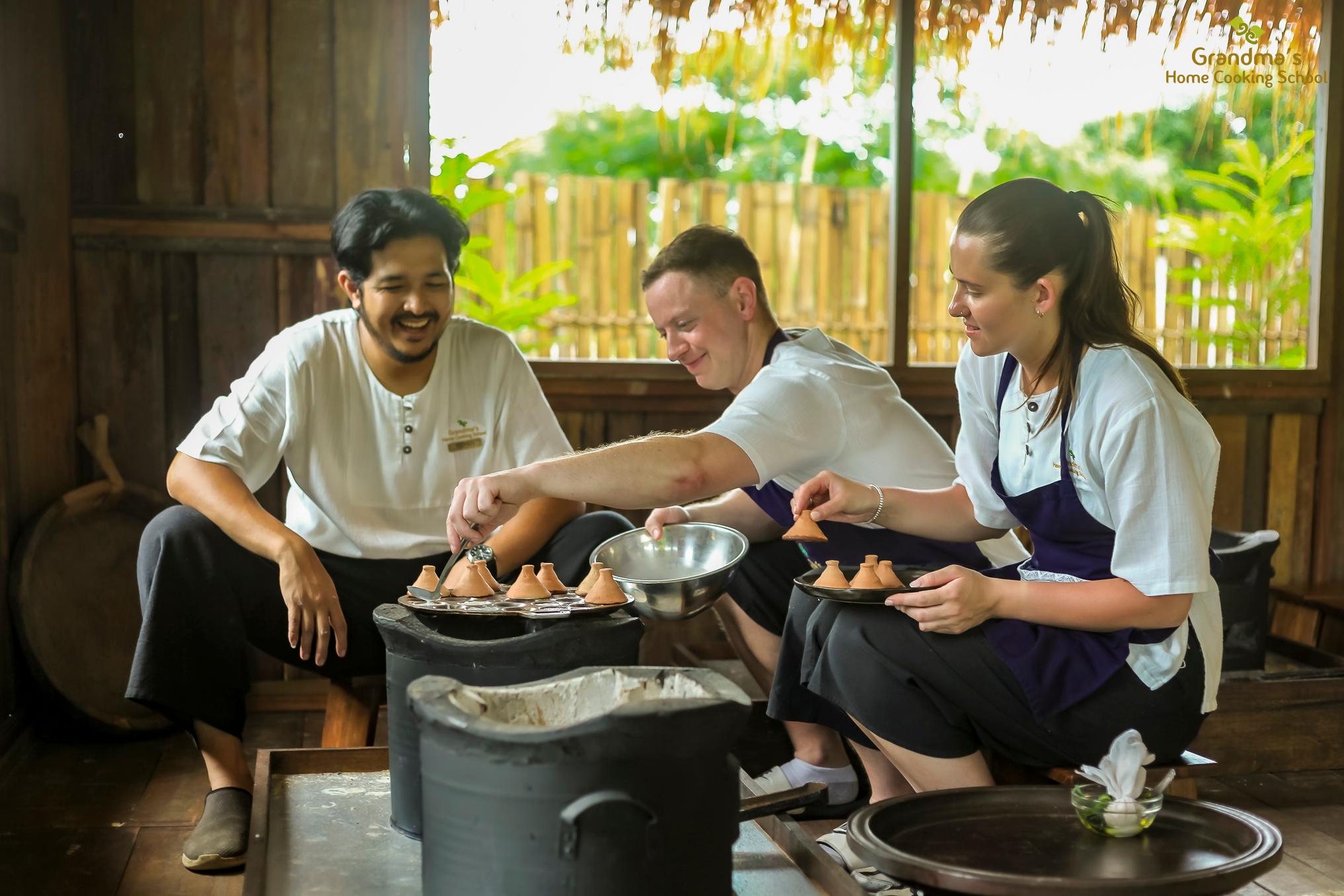
Pickup, market, farm, cook four to six dishes, eat everything you made, go home with the recipes.
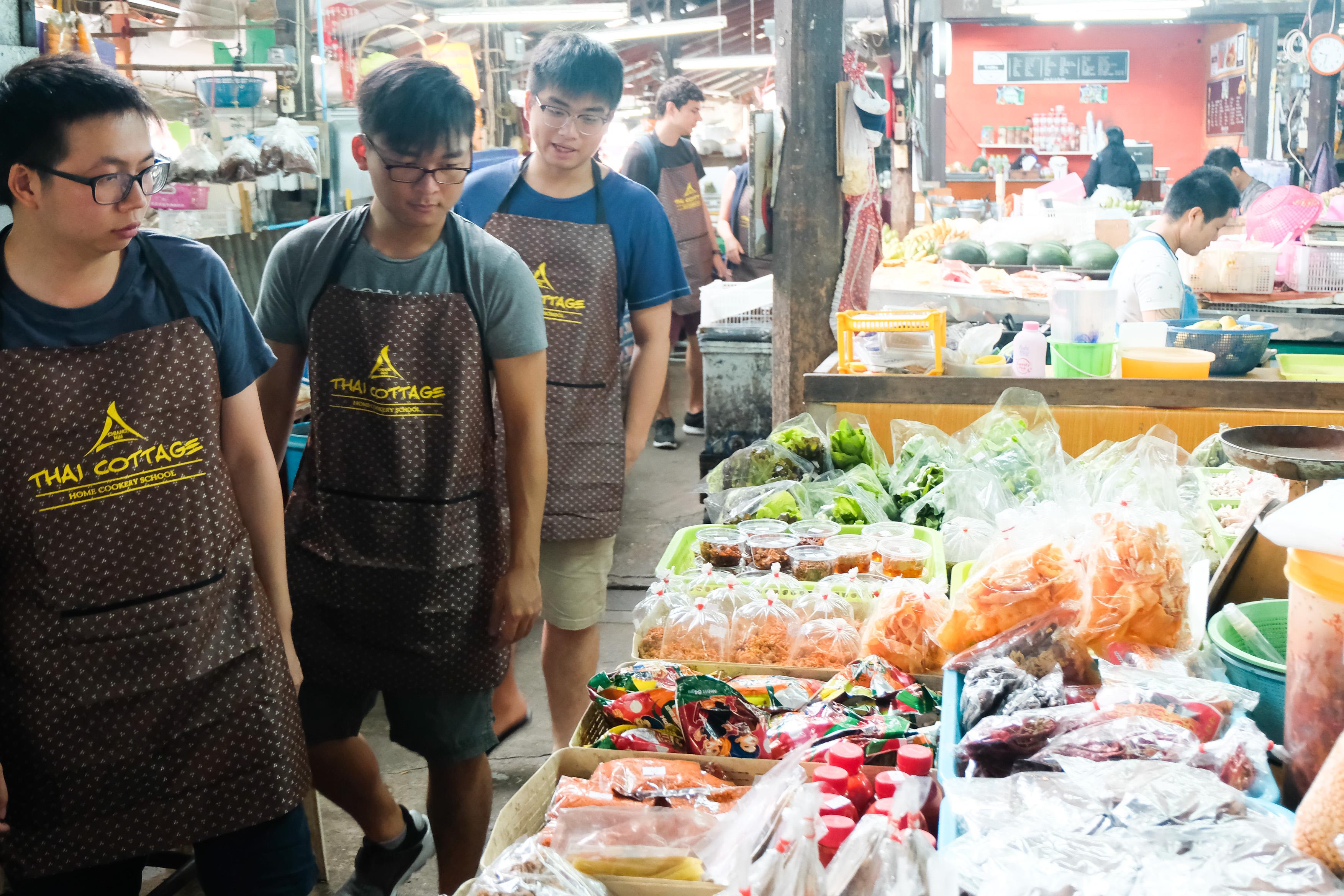
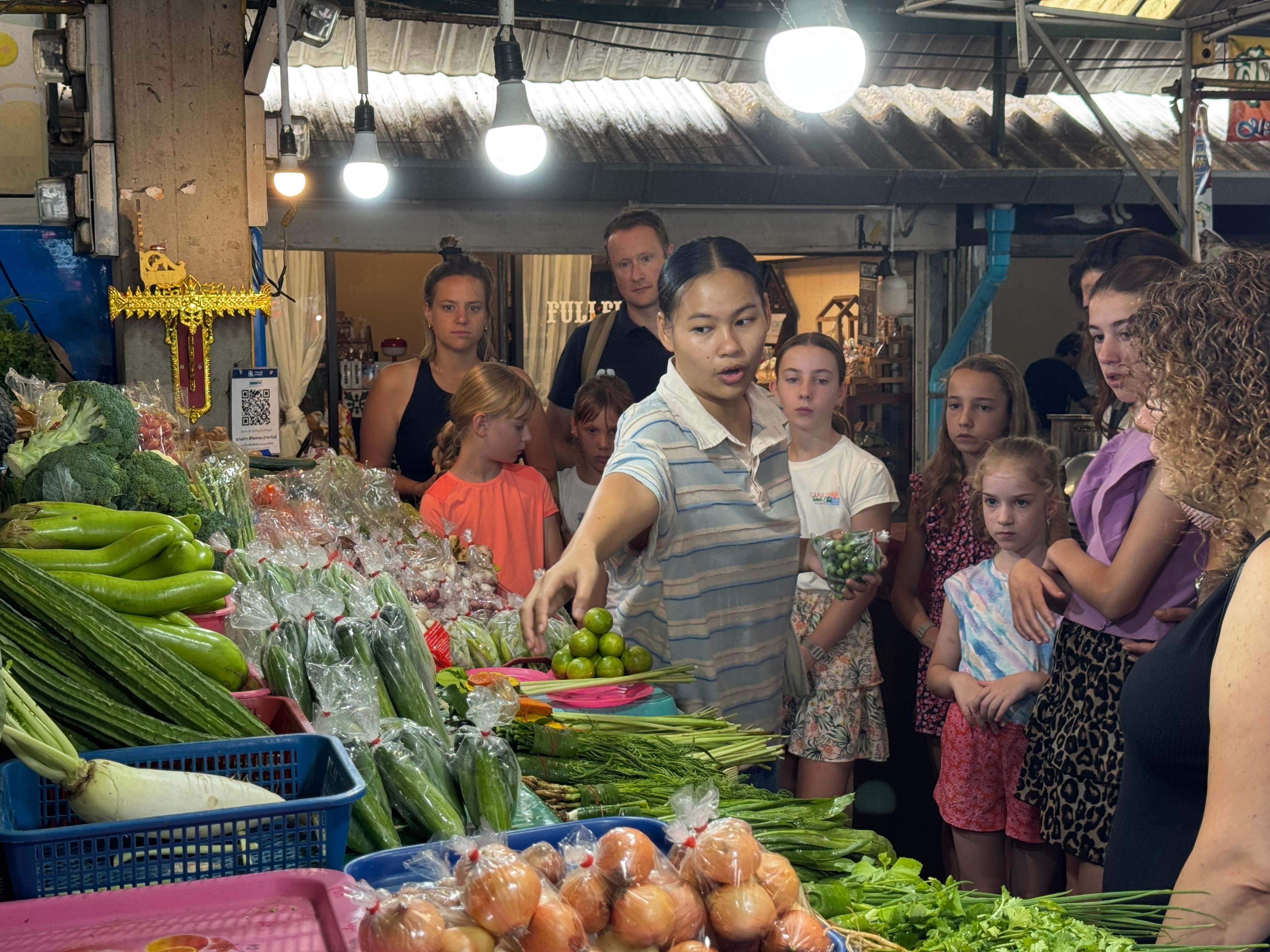
The market walk is the part people remember, and it is what separates a cooking class from a cooking demonstration. A guide takes you round a Thai wet market, explains the four or five ingredients you cannot identify, and you buy what you are about to cook. Most Chiang Mai classes include it. The few that do not are usually cheaper for exactly that reason.
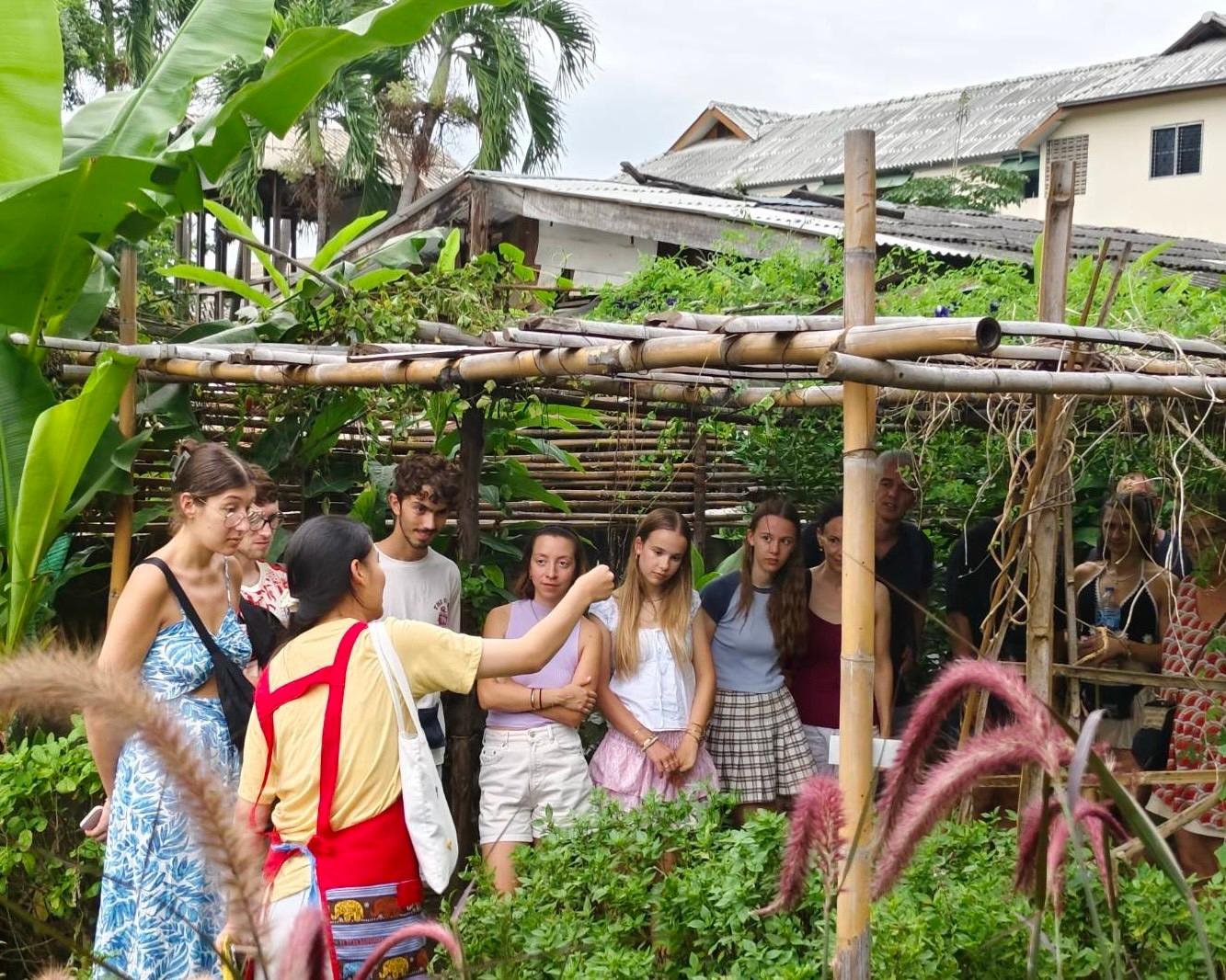
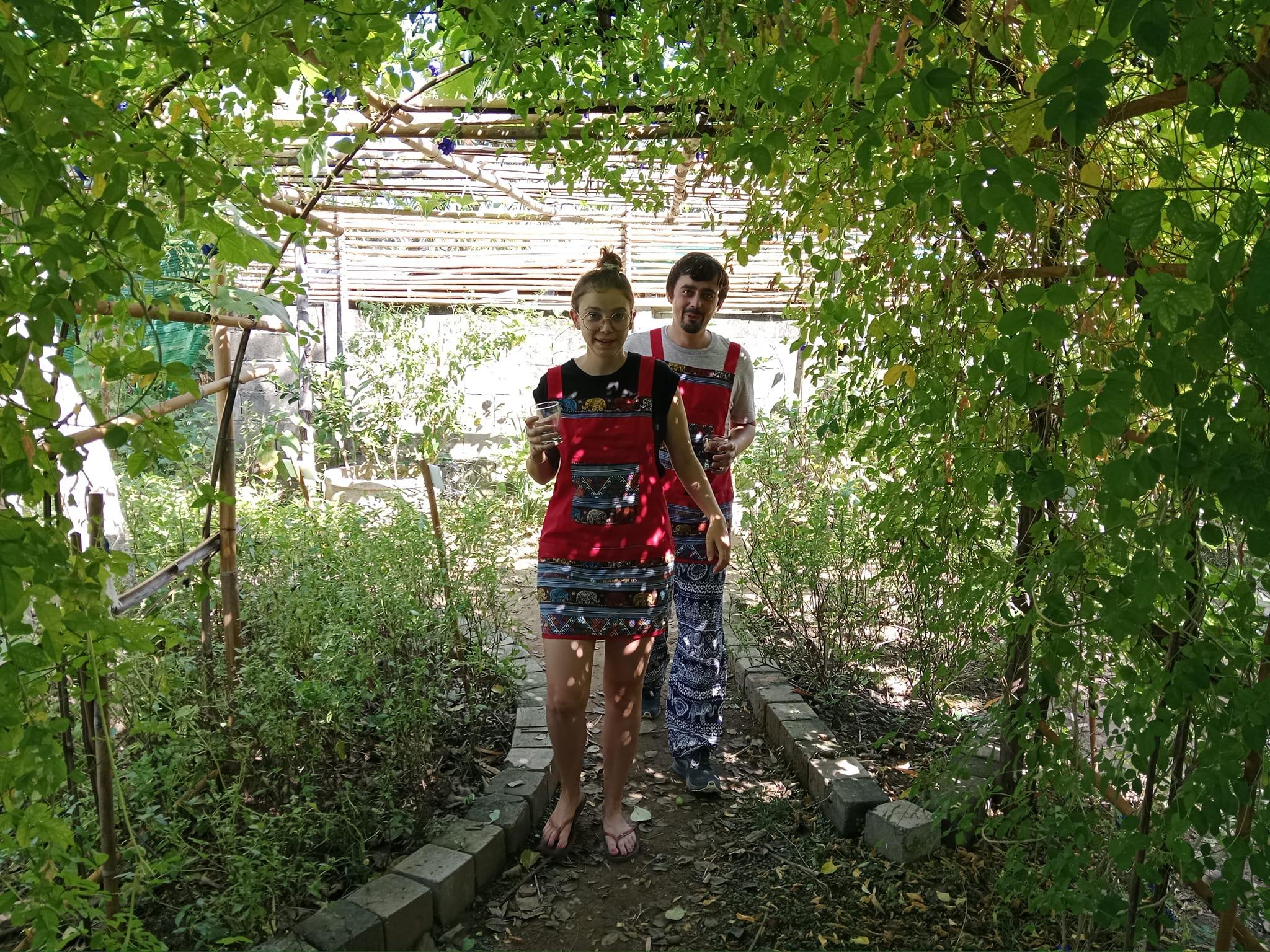
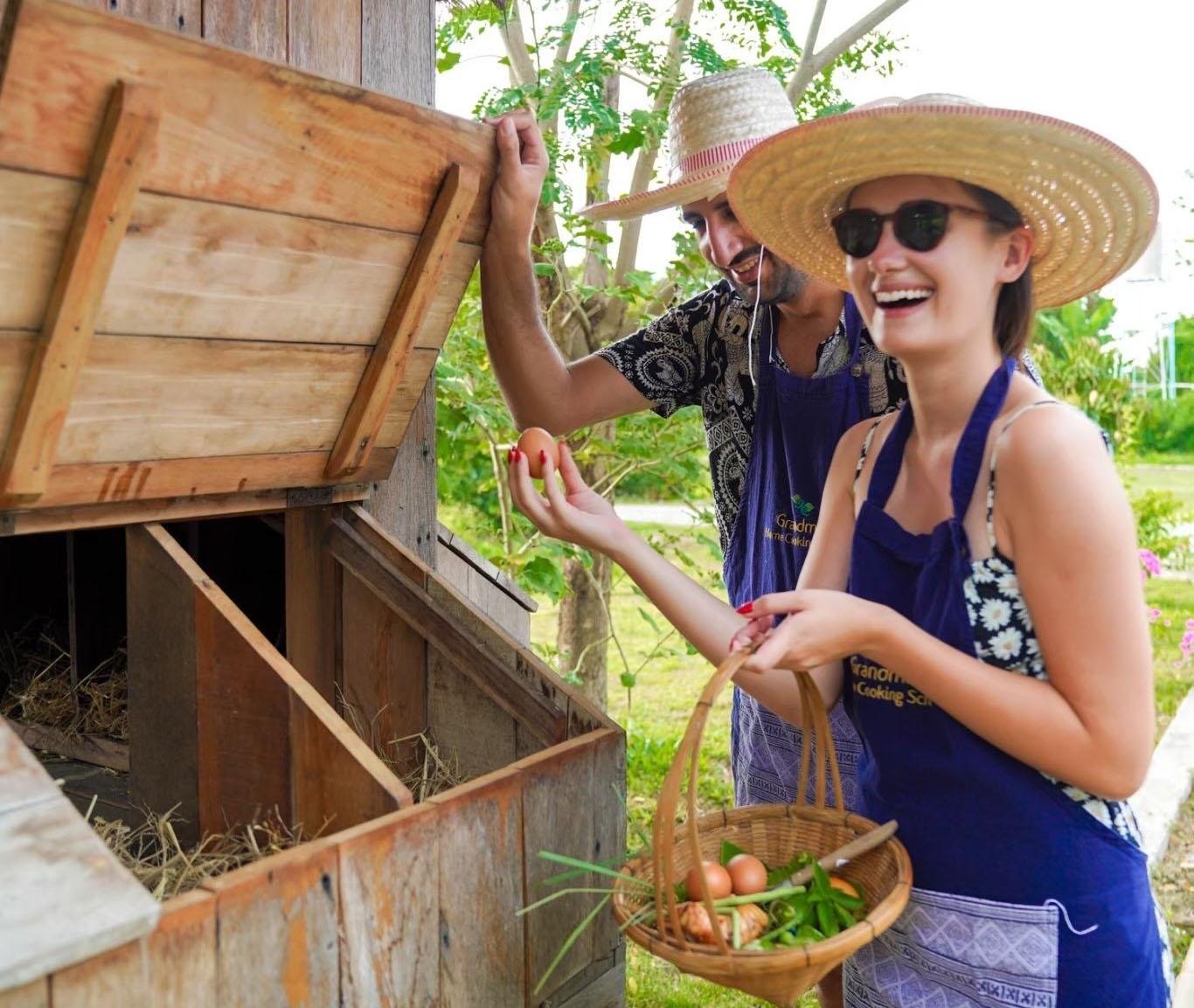
Farm schools sit outside the city with a herb garden you pick from, and they usually include transport — this is the standard Chiang Mai format and it is the reason the classes are so good value. Home kitchens are smaller, more intimate and more variable. Both are legitimate; the farm version is what most of the five-star reviews are describing.
Four to six is normal, and you generally choose from a menu rather than everyone cooking the same thing — a curry, a soup, a stir-fry, an appetiser and a dessert is the usual shape. Classes advertising more dishes are often counting the paste you grind as a separate item, which is fair enough but worth knowing when comparing two listings on the number alone.
Morning classes hit the market while it is still busy and cool. Evening classes skip the produce shopping or do it at a smaller market, and they finish with dinner rather than lunch — better if you have a day of temples planned, and the evening version is often quieter. Both include the same cooking; the difference is which meal you end up not needing.
Photo Gallery
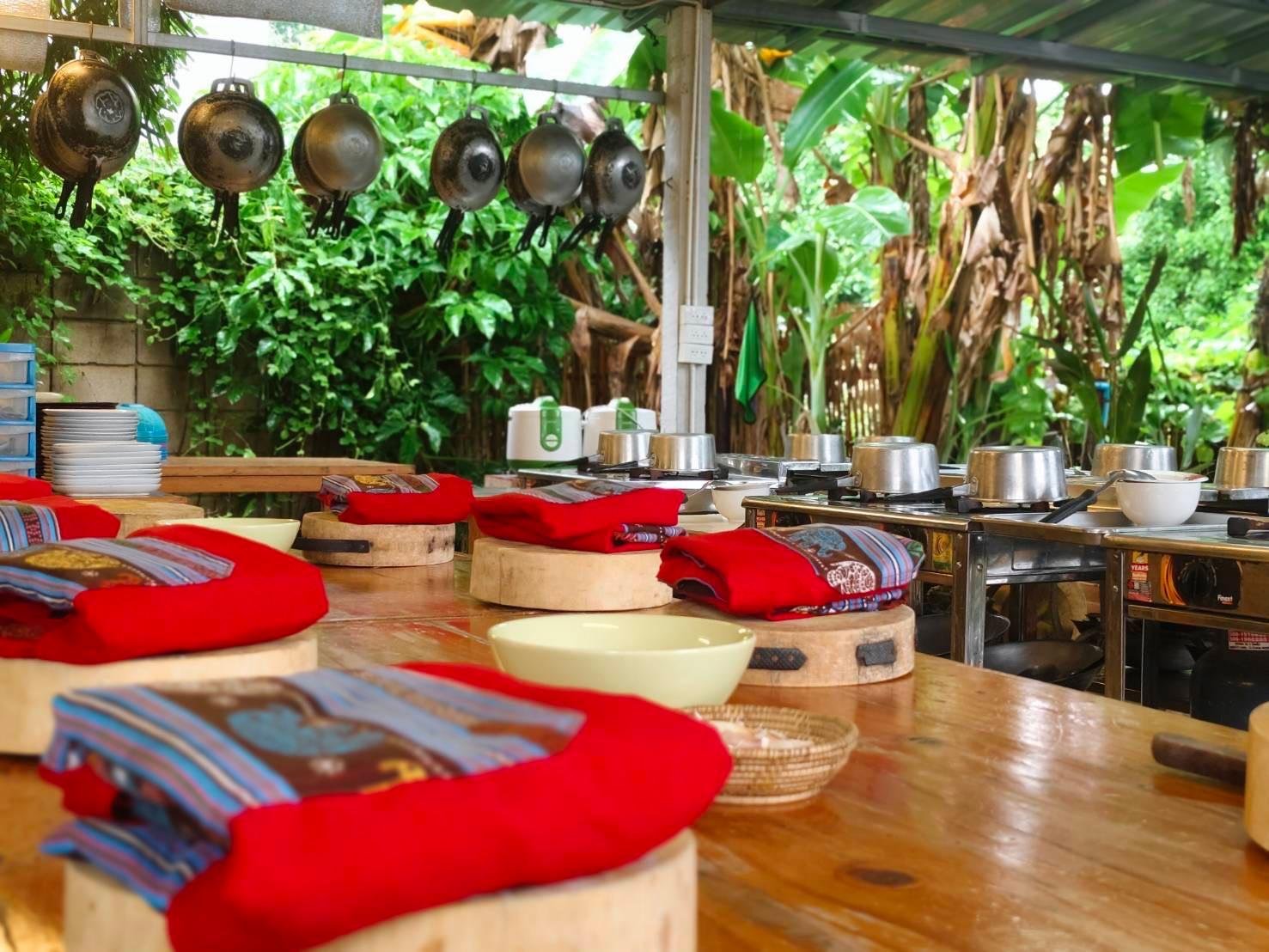
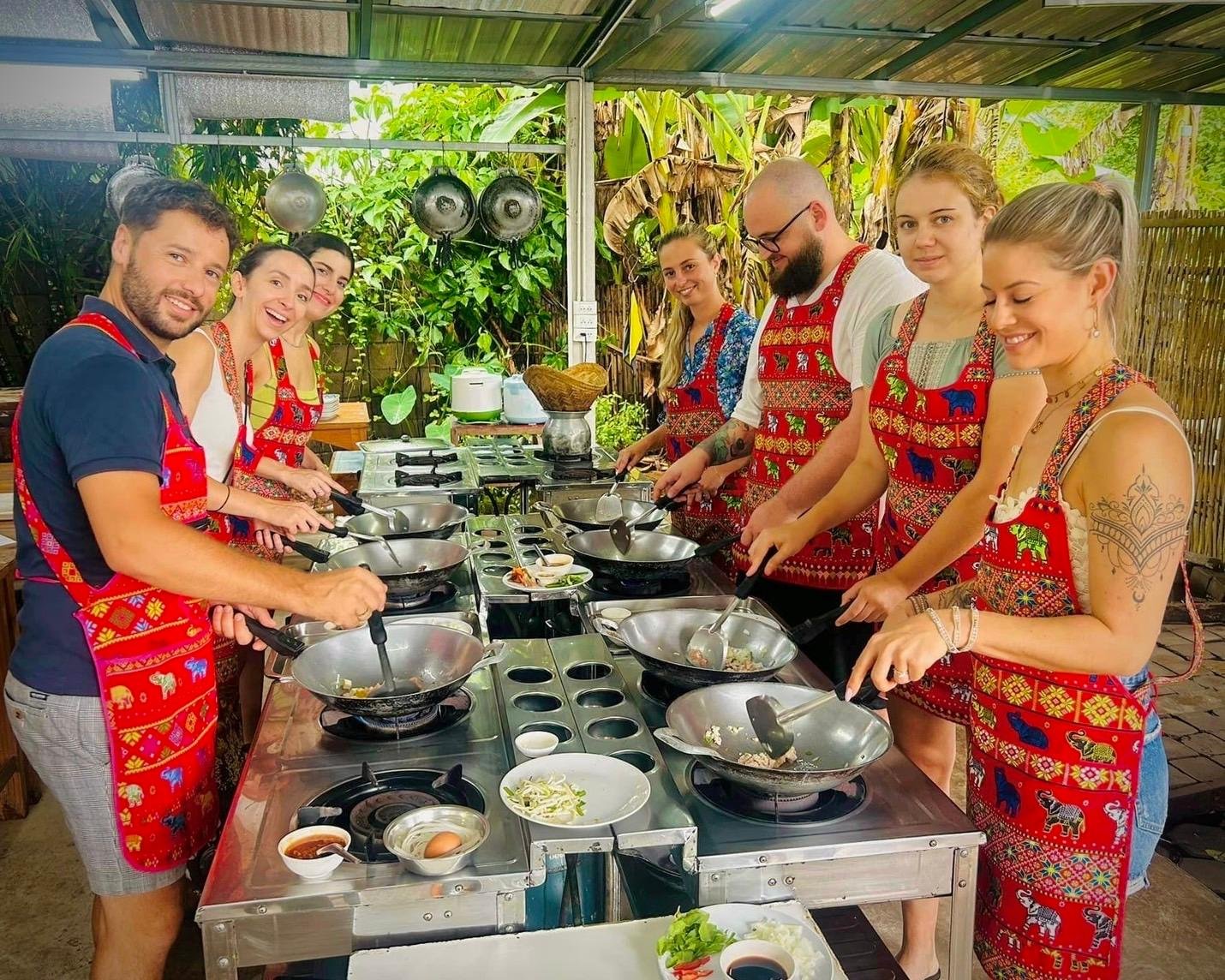
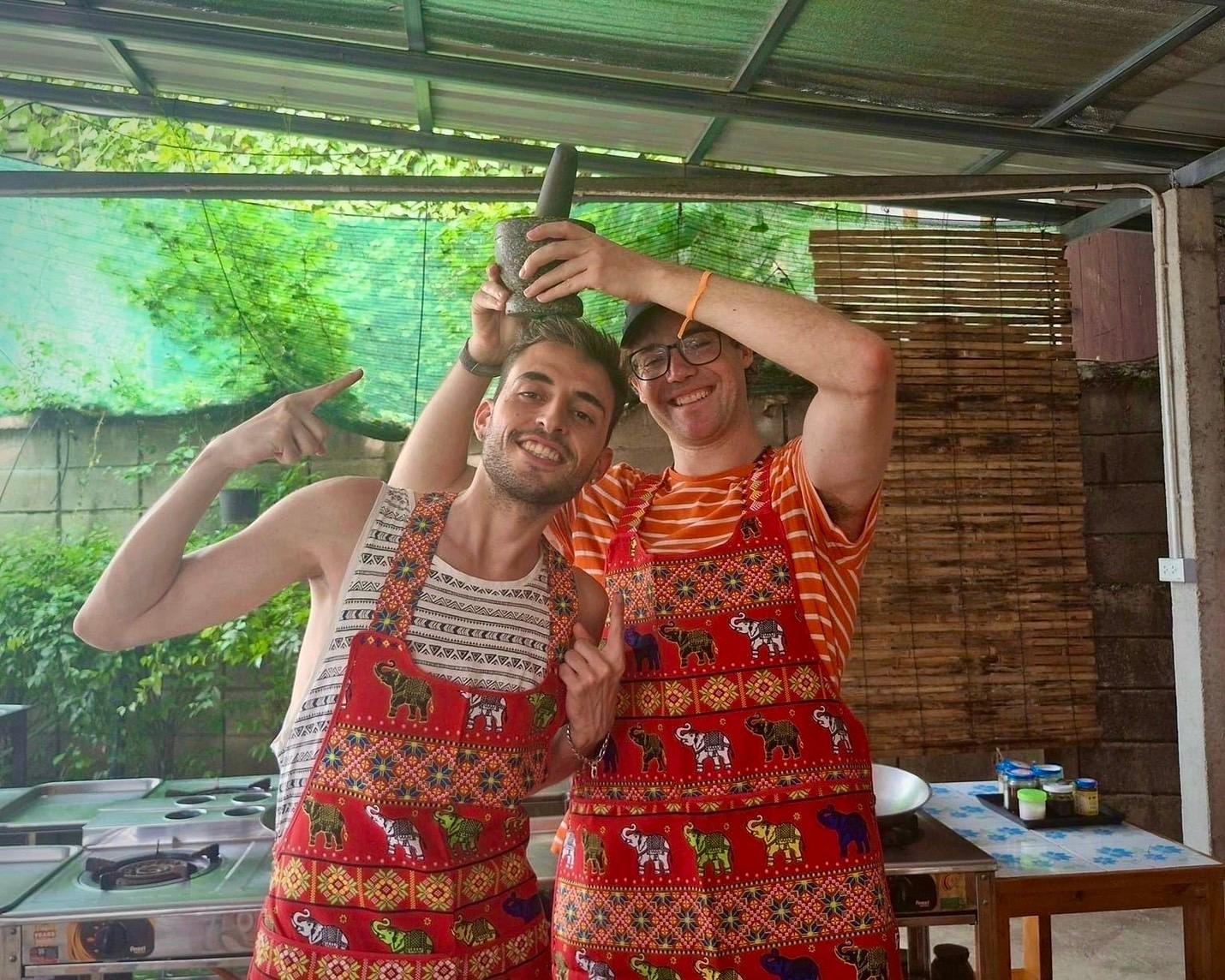
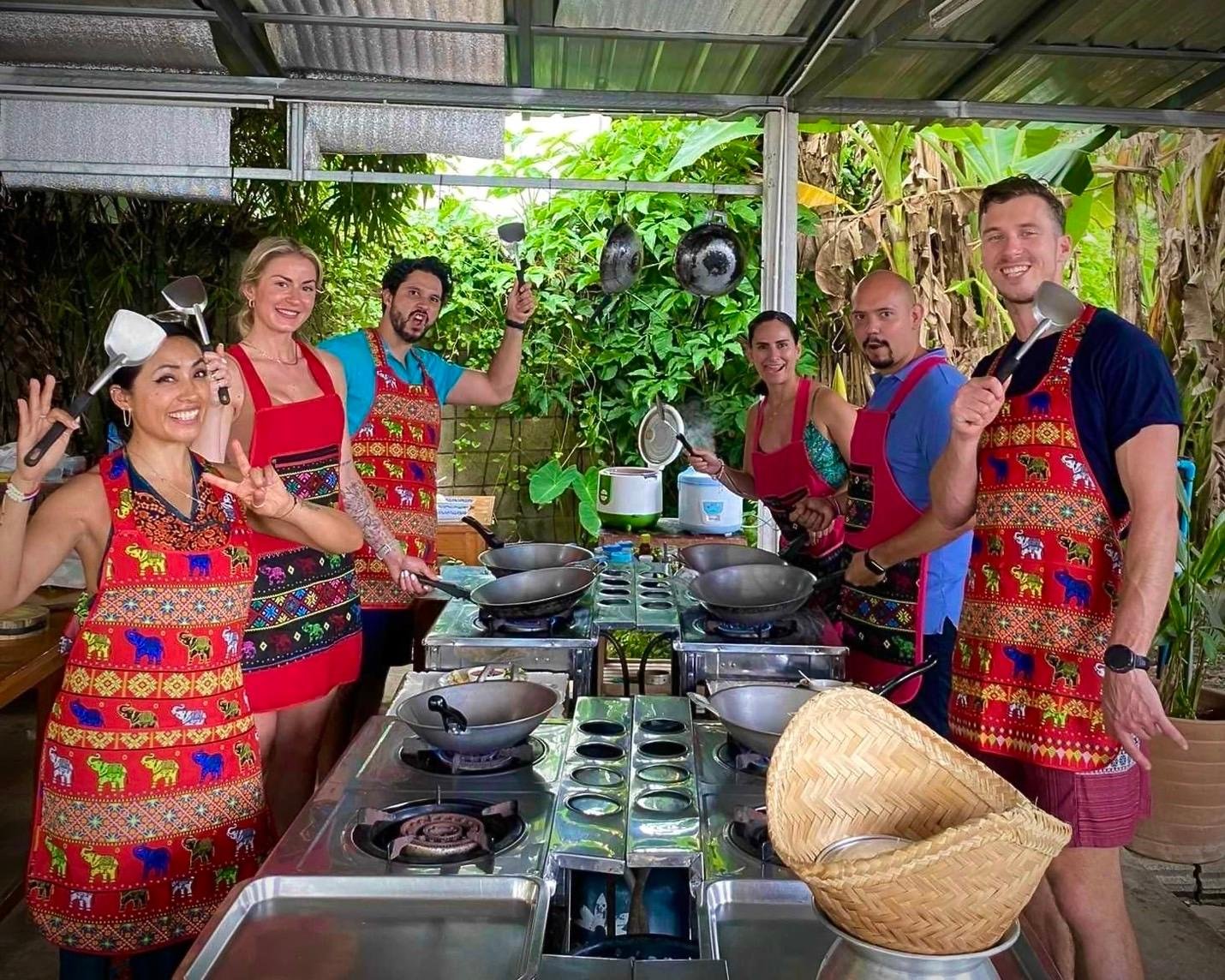
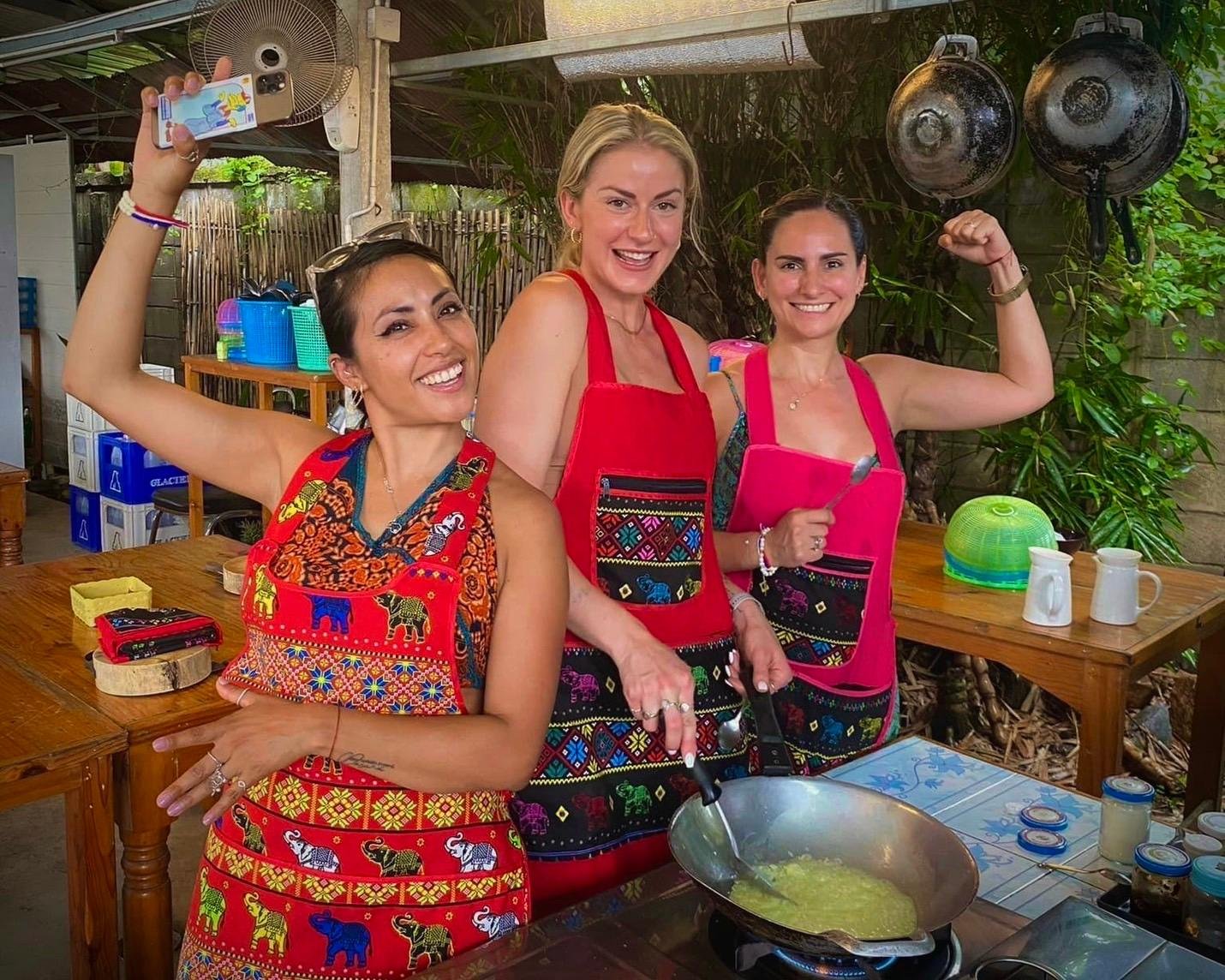
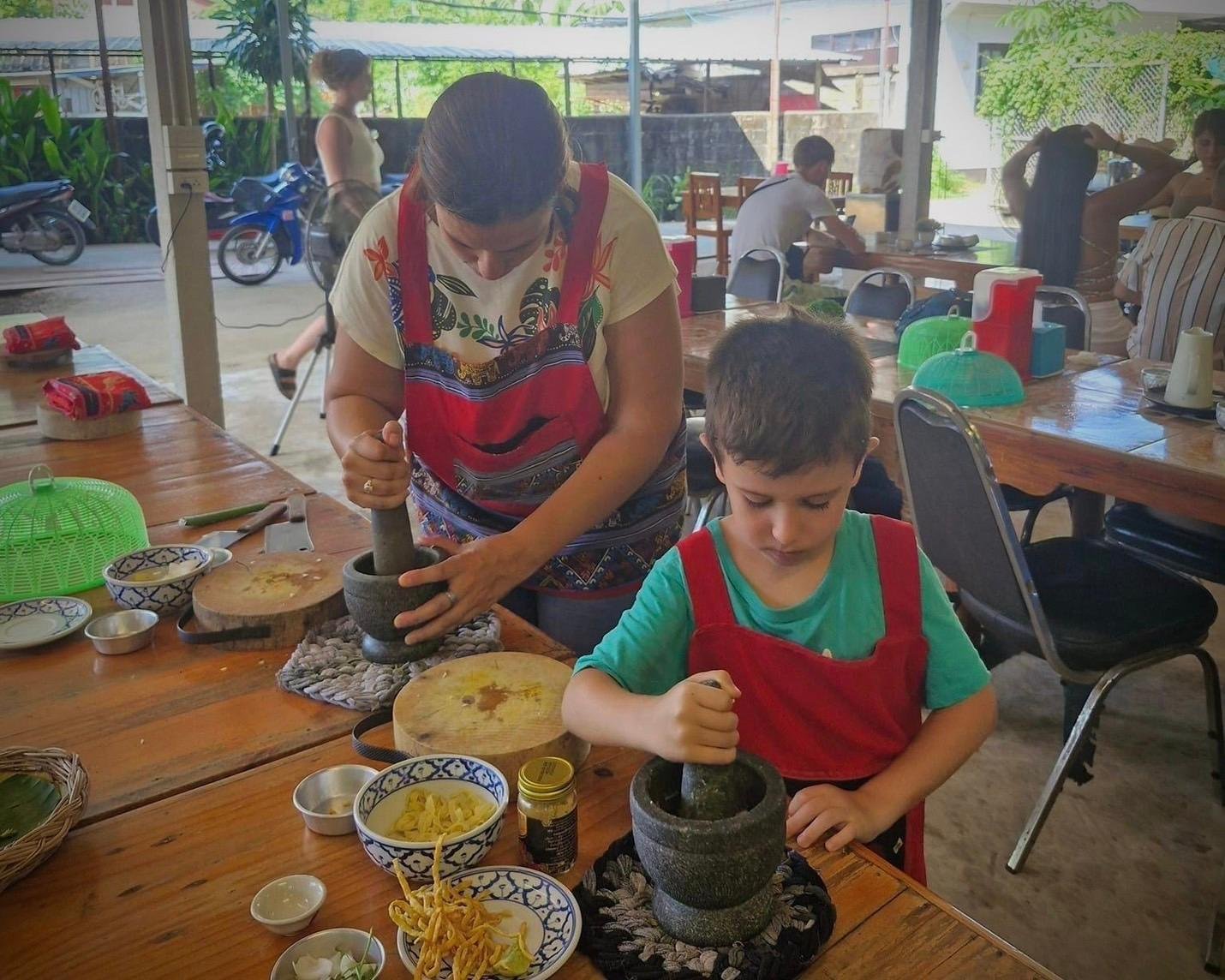
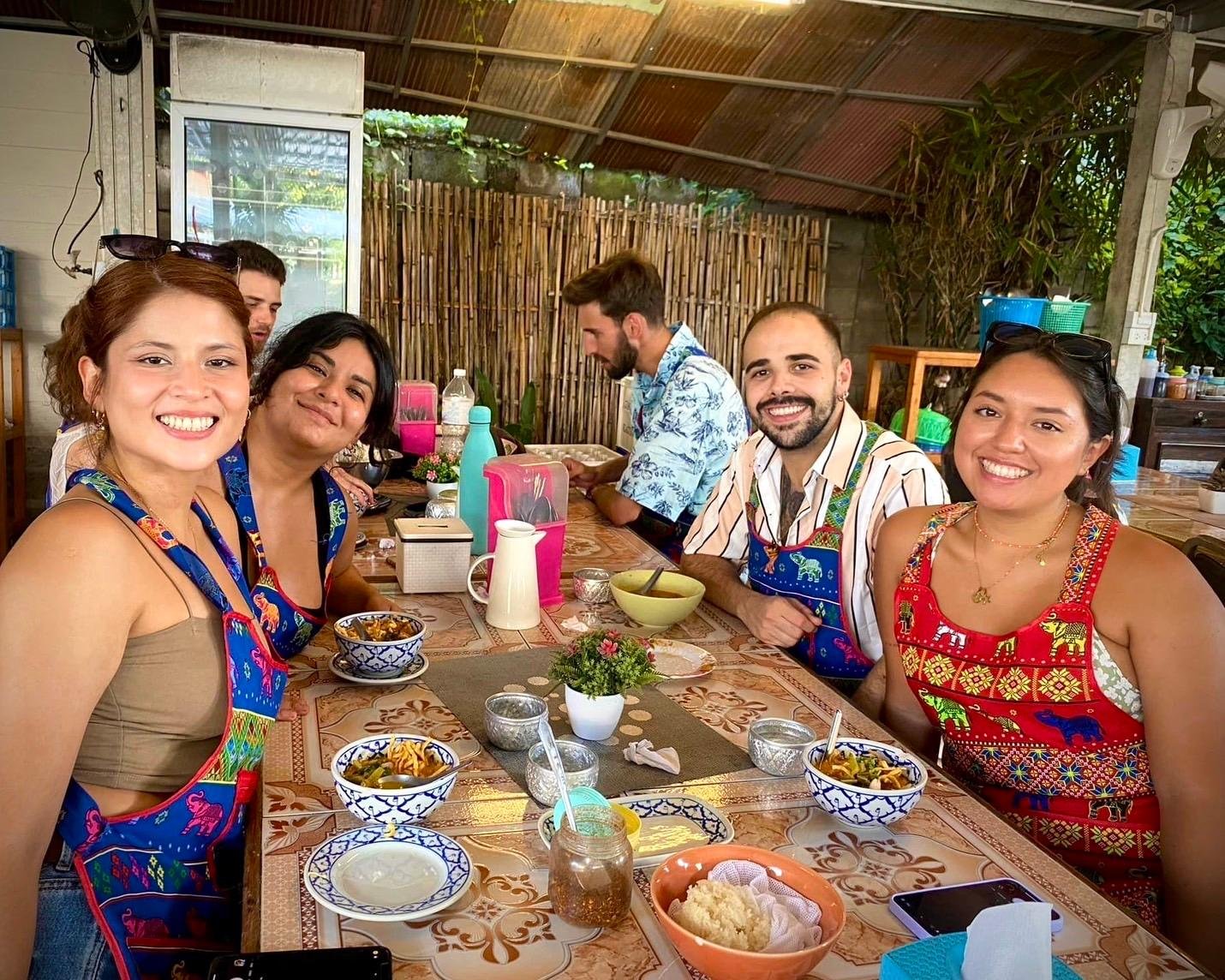
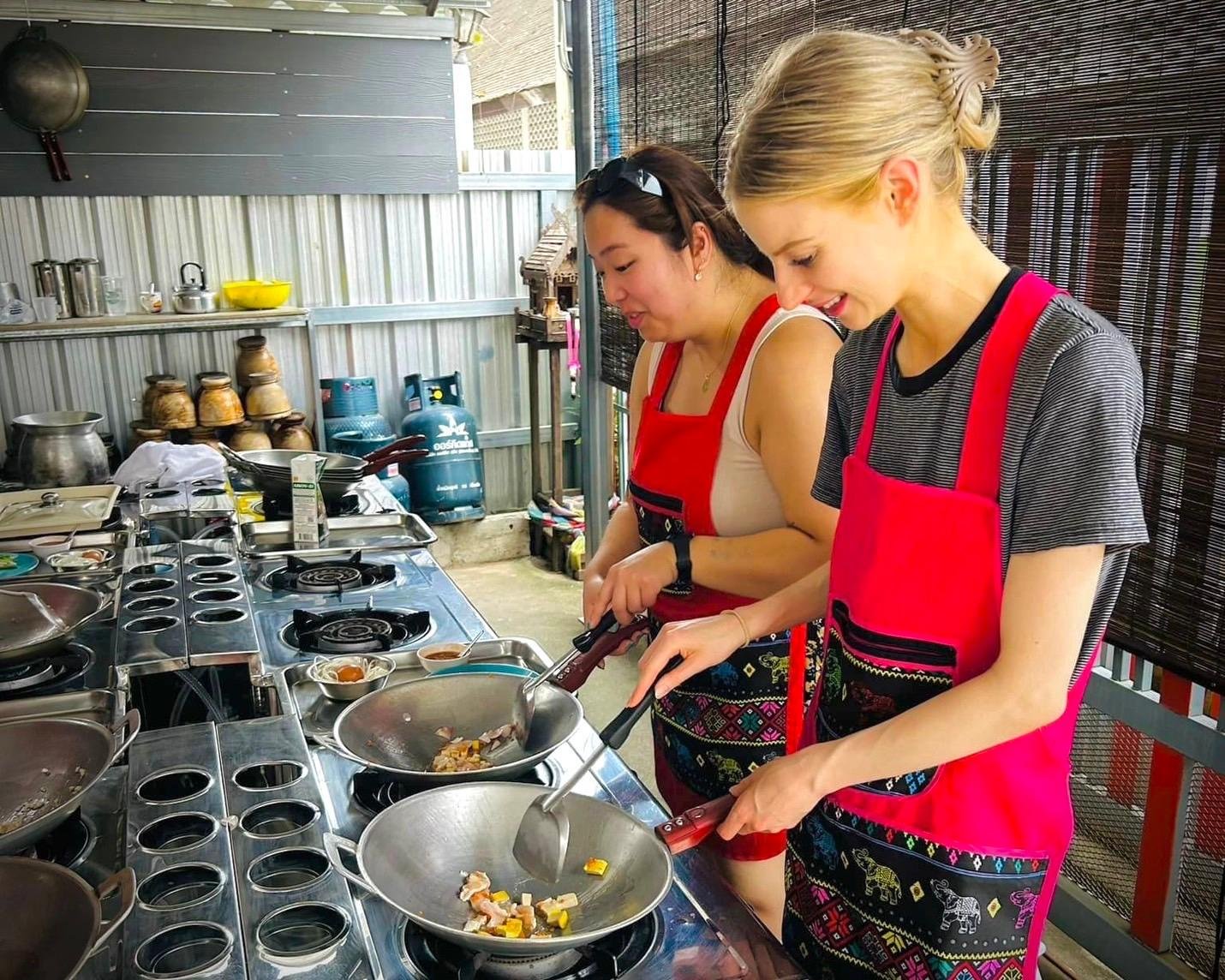
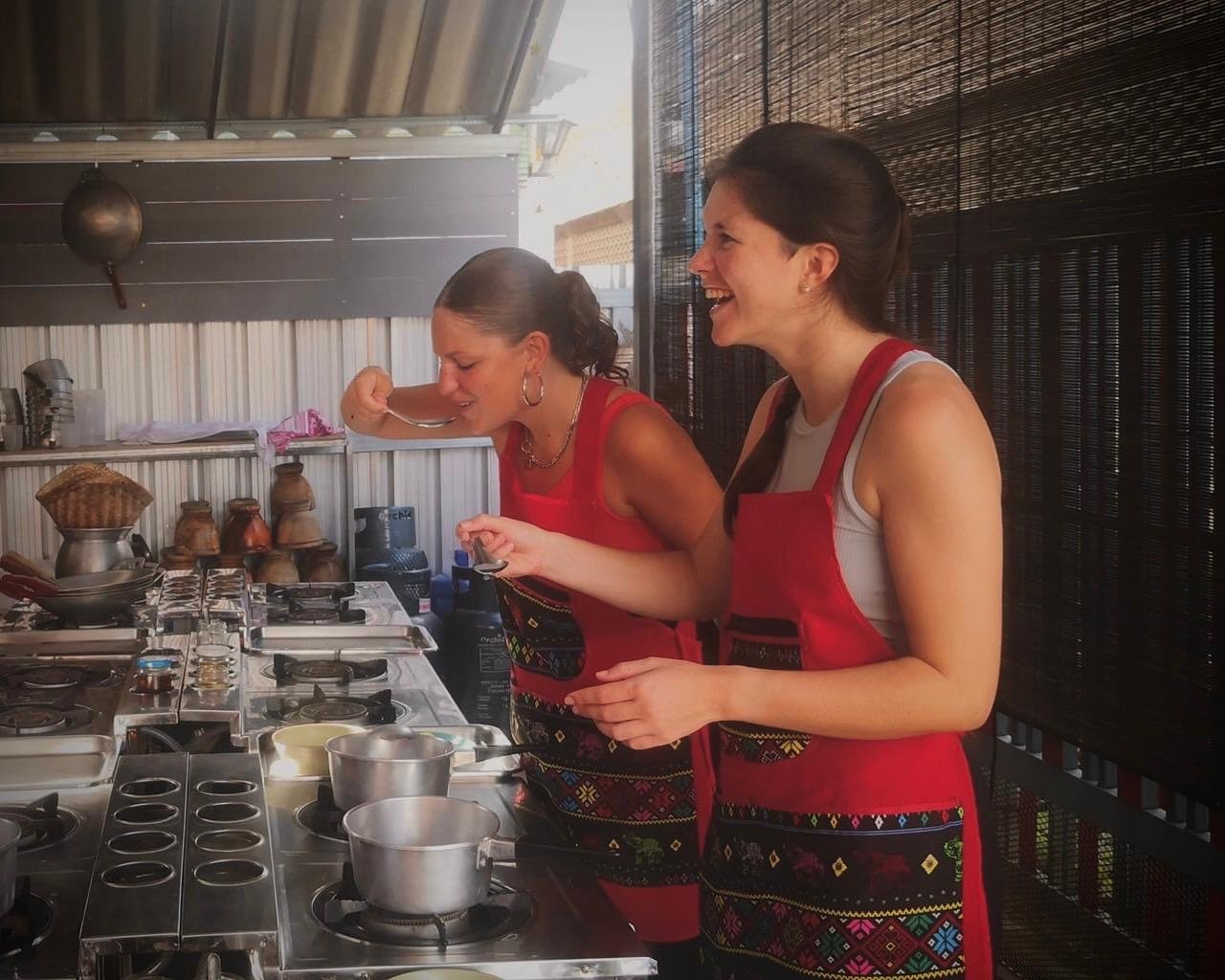
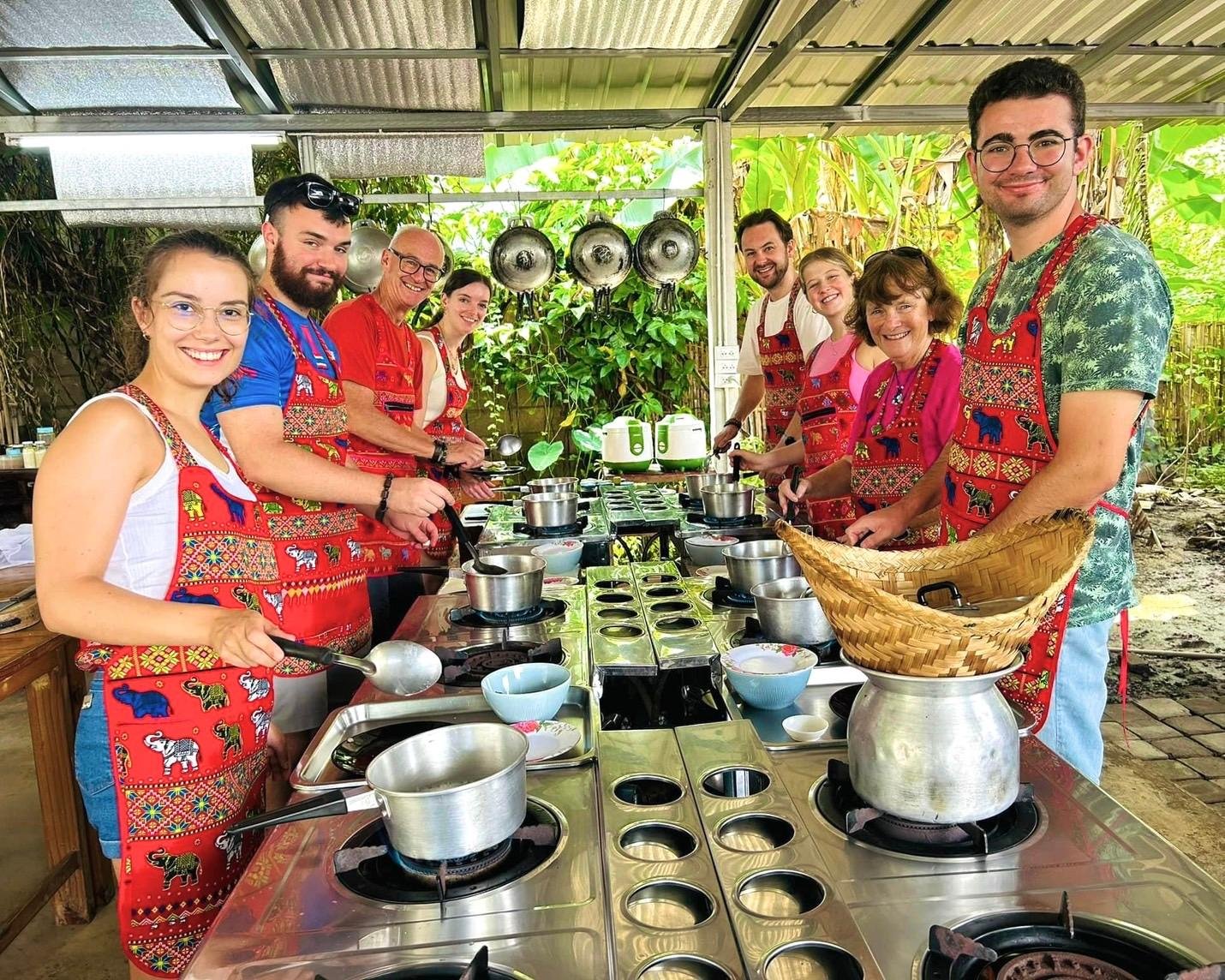
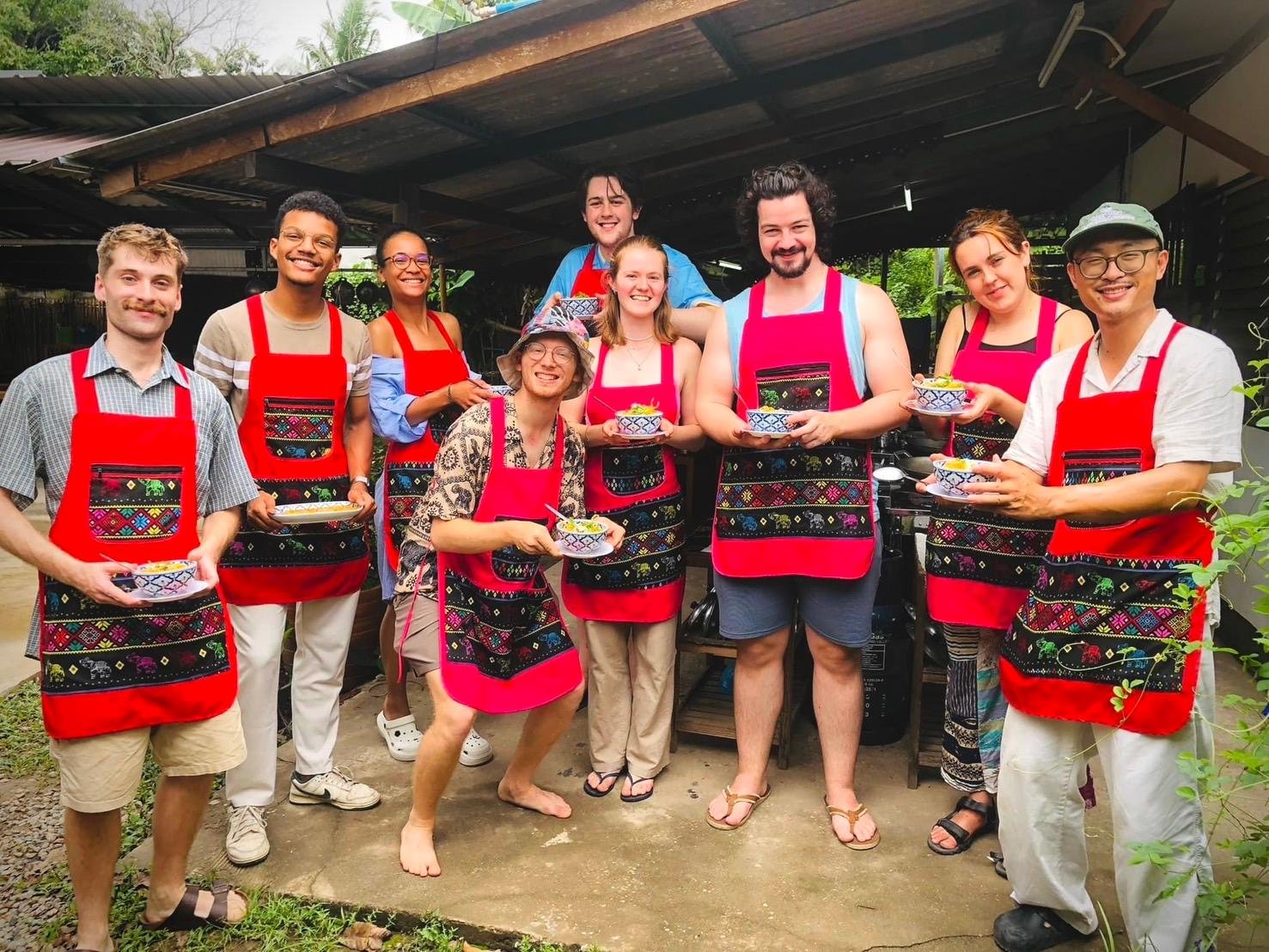
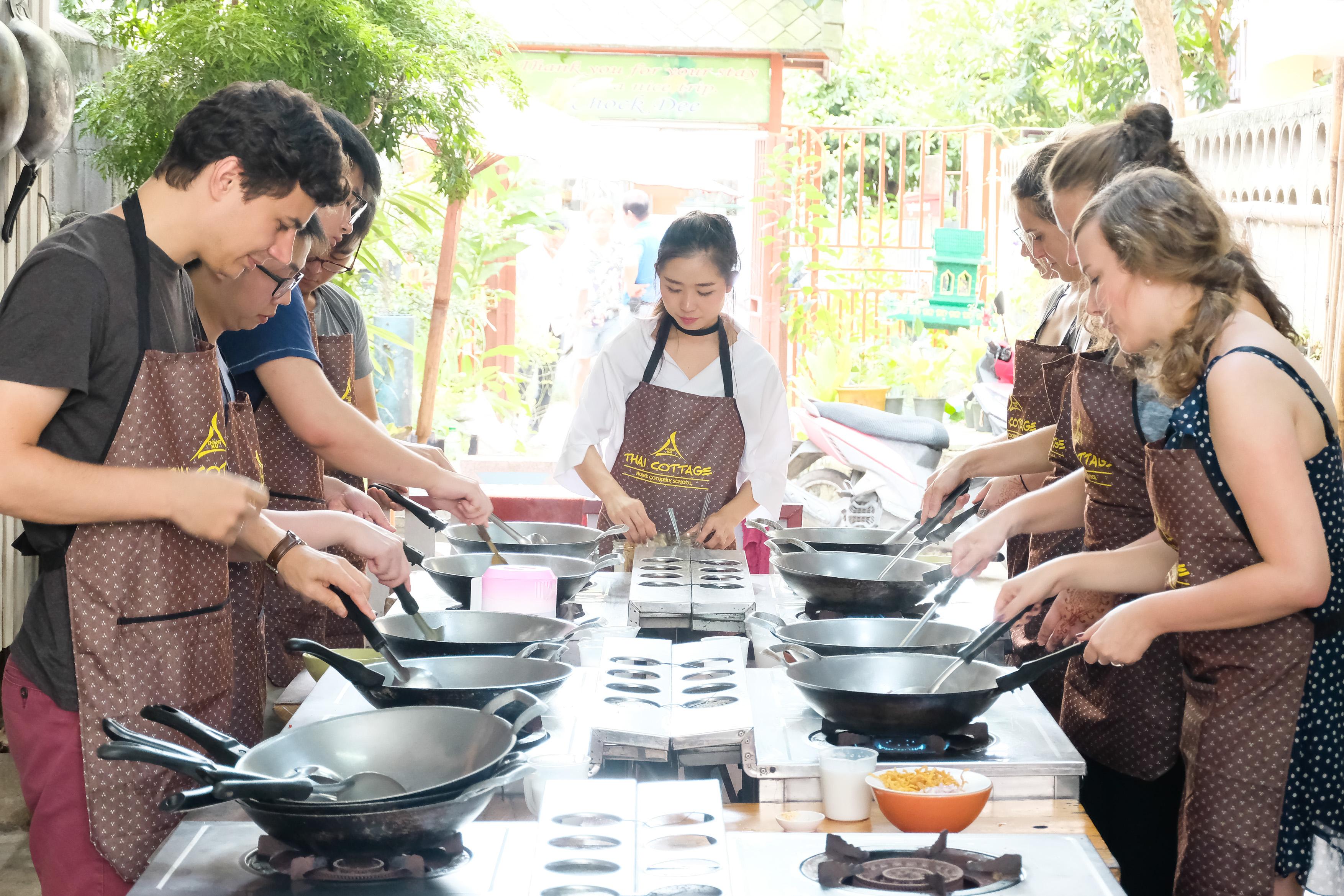
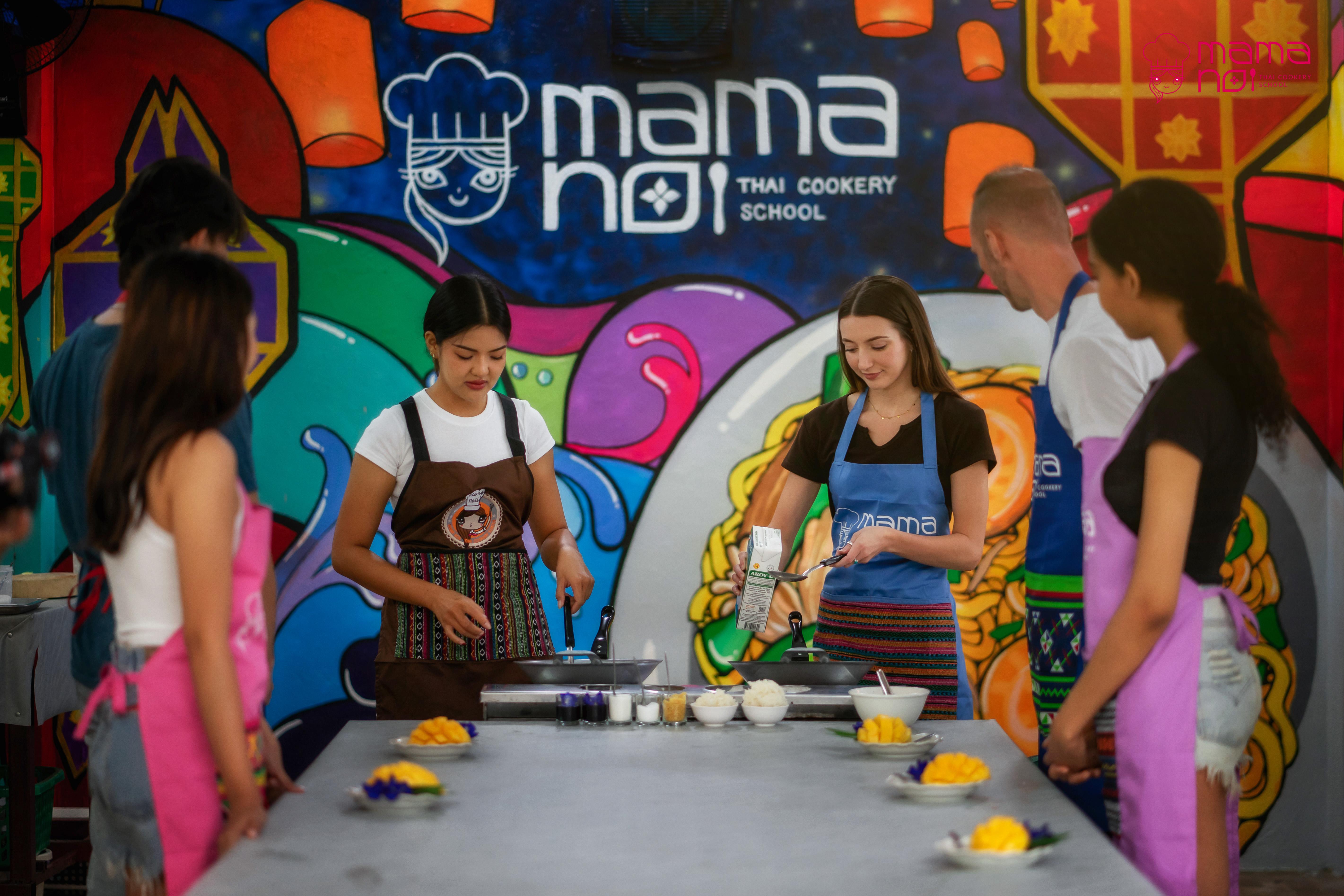
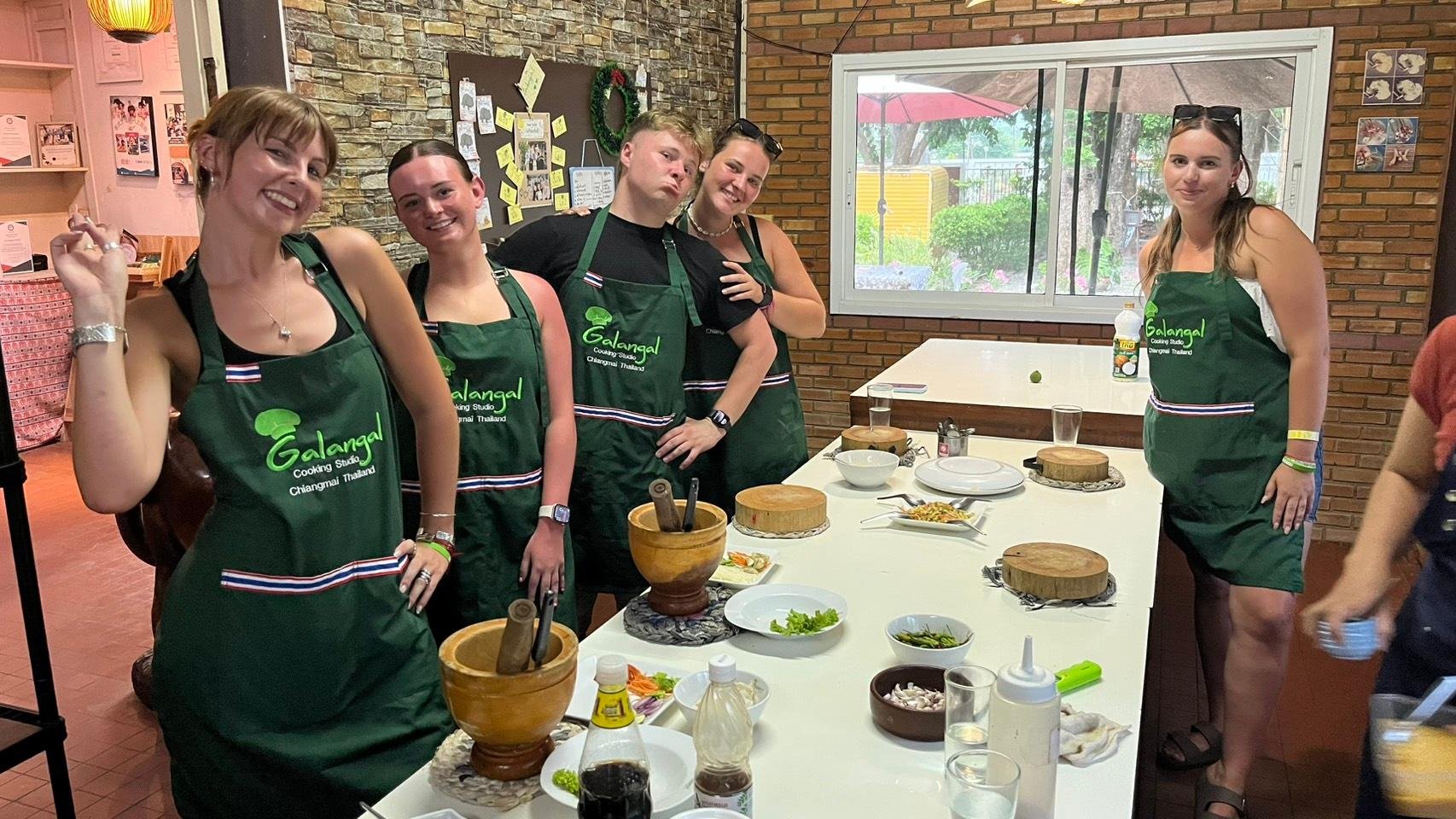
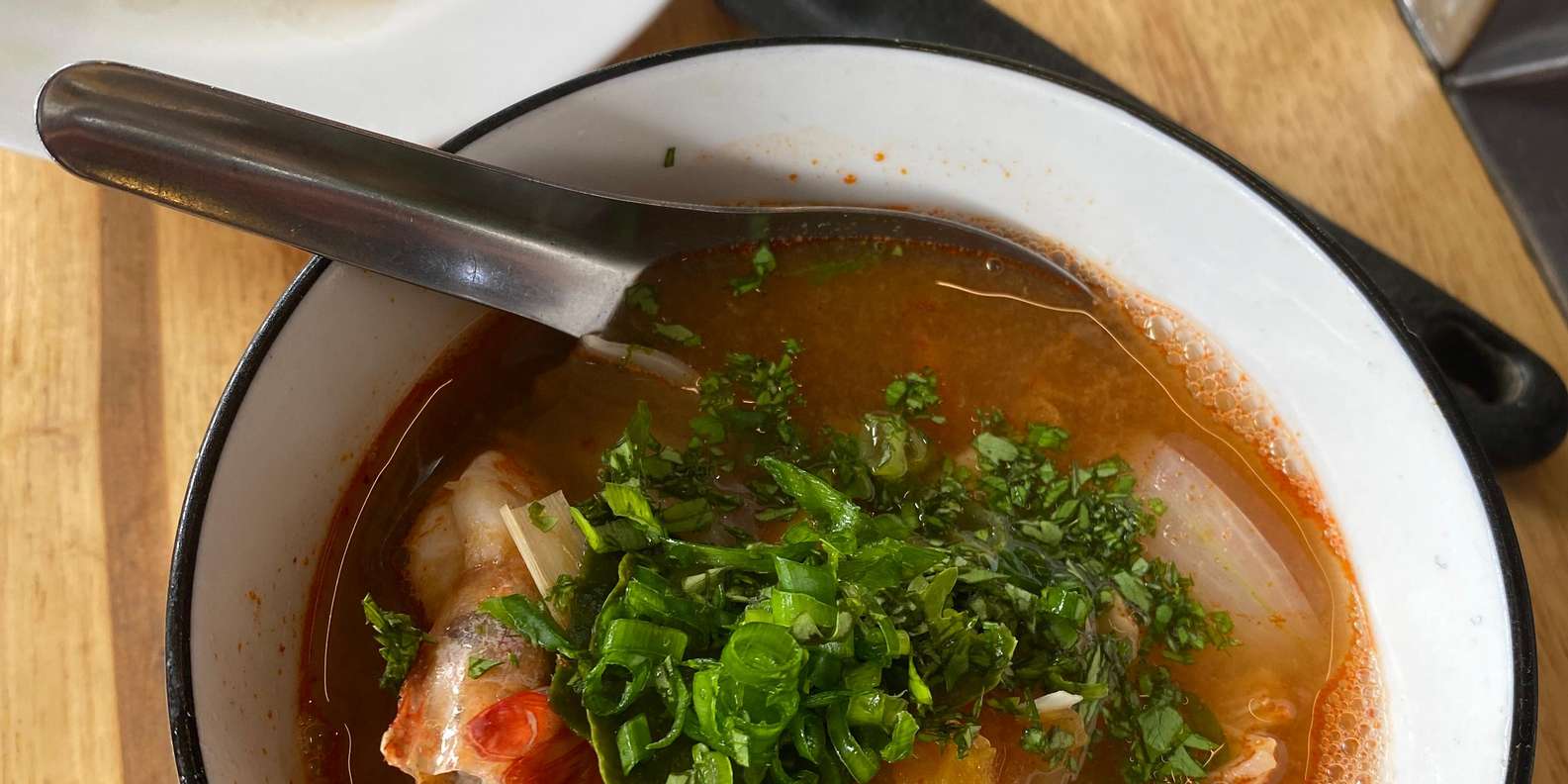
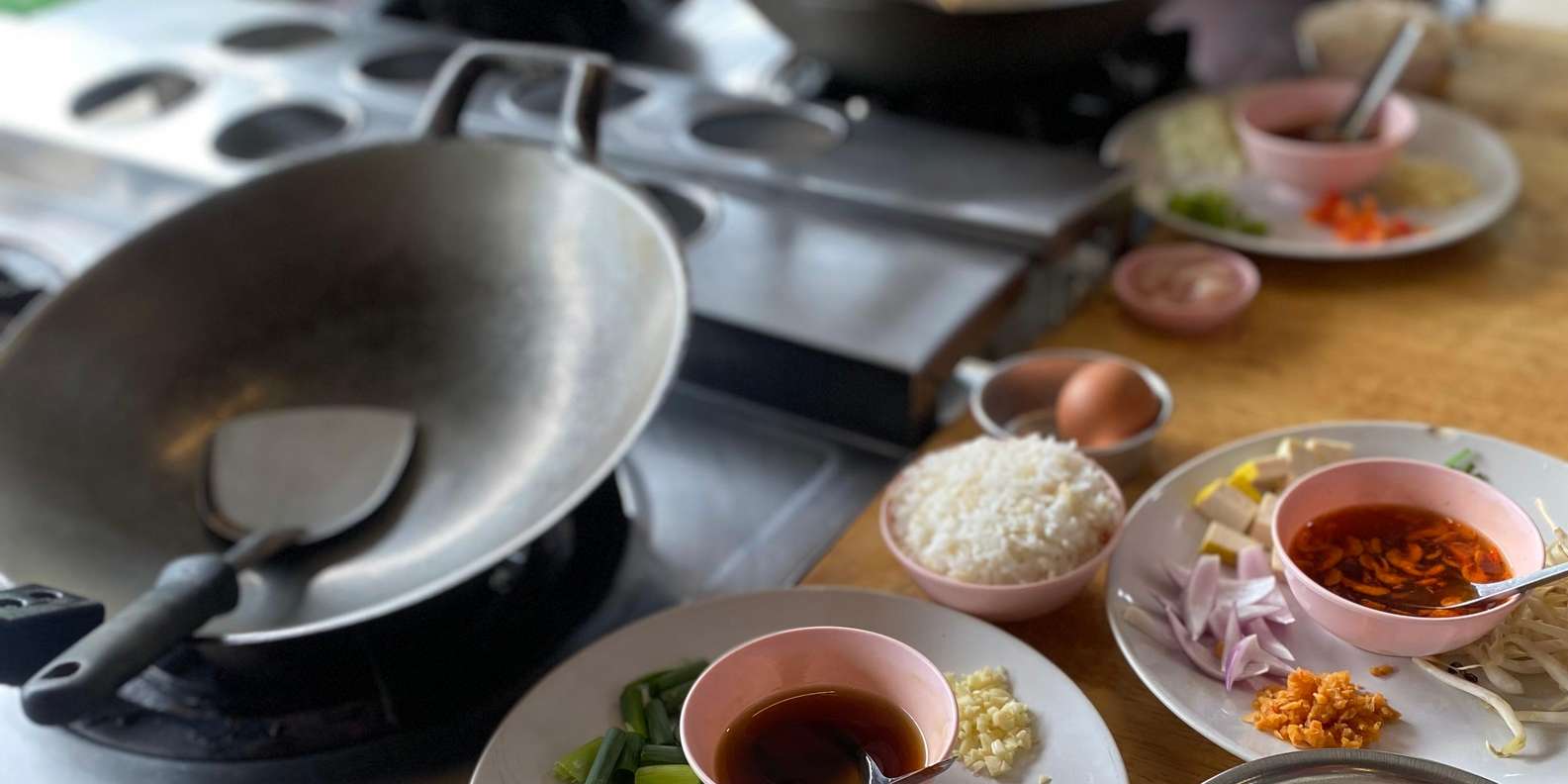
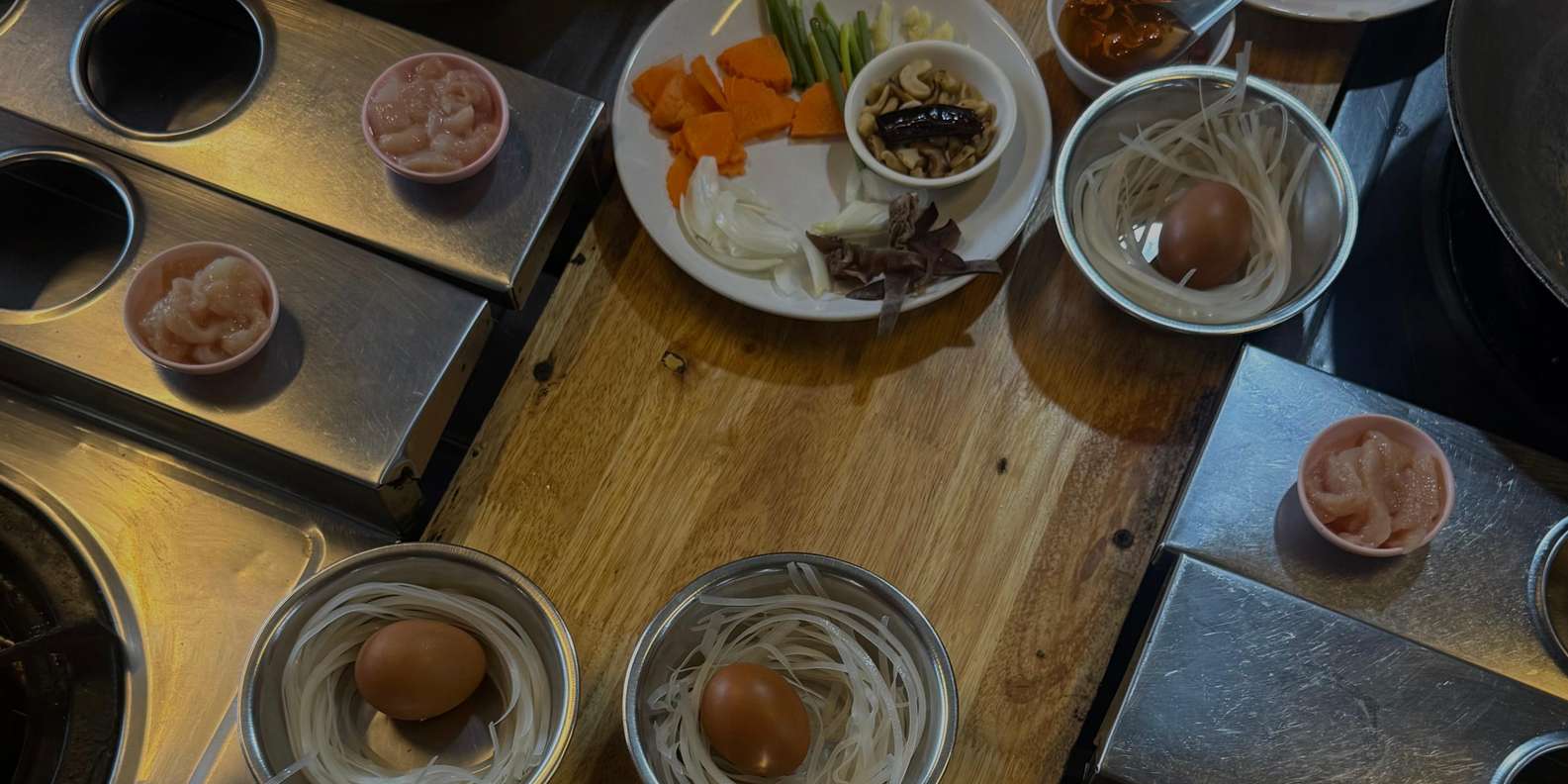
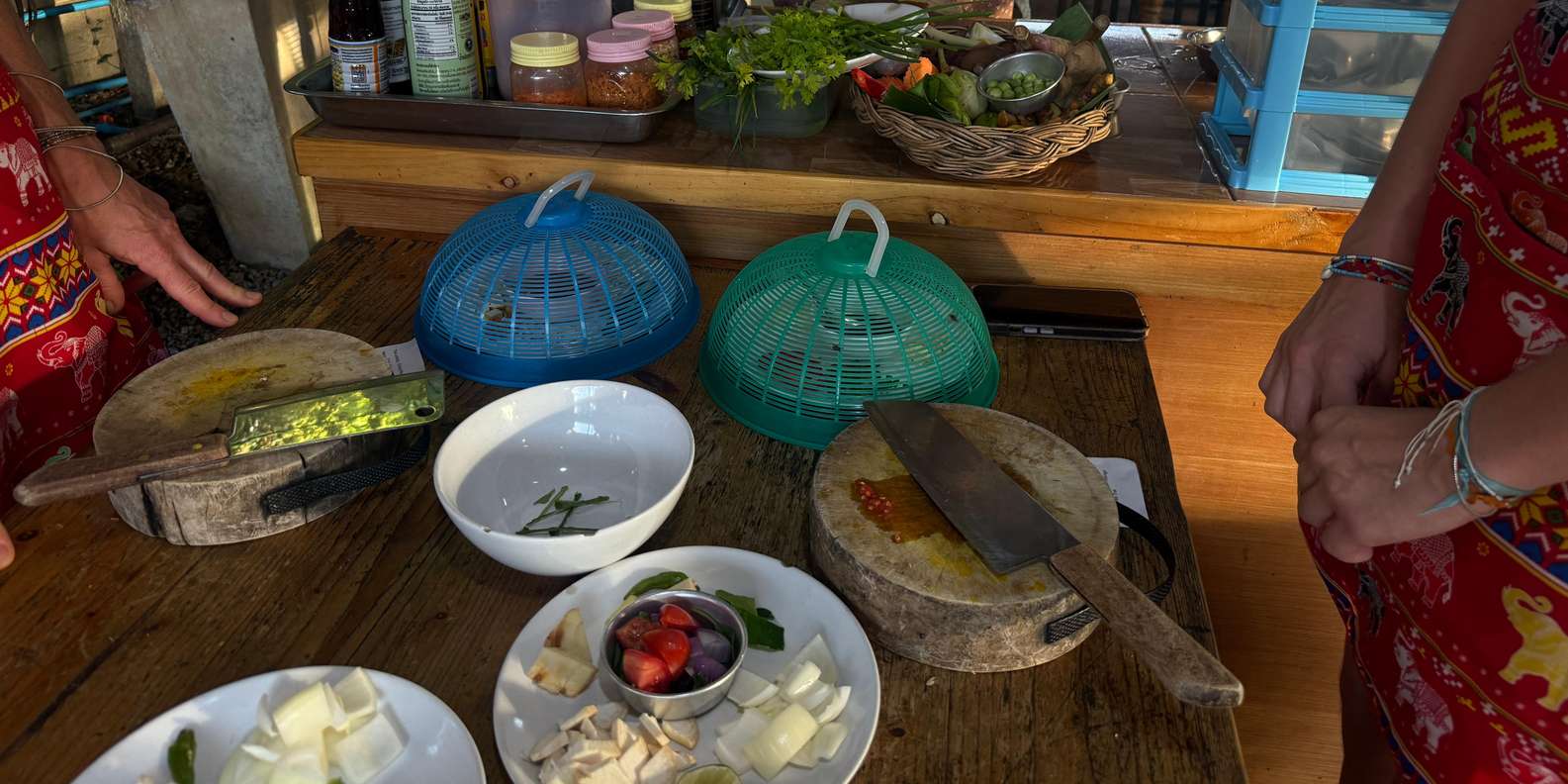
Wet-market produce, the herb garden, woks over open flame, and everything you cooked laid out at the end.
Book Your Experience
Select your preferred date and time. Instant confirmation — free cancellation up to 24 hours before departure.
The ratings will not separate these schools — they are all excellent. The format will.
| Feature | THE CLASSIC Farm School with Market Tour | Home Kitchen Class | Evening Class | Elephant Sanctuary + Cooking |
|---|---|---|---|---|
| What You Pay | $24–$34 per person | About $35 per person | About $24 per person | $52–$121 per person |
| How Long | 4–6 hours including transport | 3–4 hours | 3–4 hours, finishing with dinner | A full day, or two with a homestay |
| Market Tour | Yes — a full wet-market walk with a guide | Usually, at a smaller local market | Often a smaller market, or skipped | Usually included alongside the sanctuary visit |
| What Makes It Different | A herb garden you pick from, and hotel transport included | Smaller groups, someone's actual kitchen | Quieter, cooler, and you end the day fed | Two of the city's headline activities in one booking |
| Who It Suits | First-timers, and most people most of the time | Anyone who dislikes group activities | Temple days, and anyone who is not a morning person | Short trips where both were on the list anyway |
| Depth of Evidence | 6,073 reviews on the most-booked class | 168 reviews | 691 reviews | 444 reviews on the leading combination |
| Check Availability |
Every School We Track
Farm schools, home kitchens, evening classes and elephant combinations — with the platform's real prices, ratings and review counts.
 MARKET + FARM
 CHEAPEST
 ORGANIC FARM
 EVENING CLASS
 WITH ELEPHANTS
 NORTHERN THAI
Chiang Mai has the best cooking-class market in Southeast Asia and possibly anywhere. Thirty-plus schools, and the top eighteen we track all rate between 4.8 and 5.0. The most-booked carries 6,073 reviews.
That is a genuinely unusual situation and it inverts the normal problem. You are not trying to avoid a bad class — you are trying to choose between thirty good ones, all charging roughly the same $24 to $121.
So this page does not rank them by quality, because the ratings will not support it. It sorts them by format, which is the thing that actually differs.
The standard Chiang Mai class, and it is a lot:
At $24 that is close to absurd value, and it is the single most recommended activity in the city for a reason.
Farm schools sit outside town with a garden you harvest from, and transport is included. This is the classic Chiang Mai format and what most of the five-star reviews describe. Home kitchens are smaller and more personal — the class at $35 and the northern-Thai one at $49 are this shape.
The market walk is what most people remember afterwards. Nearly all classes include it; the ones that skip it are usually cheaper and the listing will say so.
Morning classes catch the market busy and cool, and finish with lunch. Evening classes — like the one at $24 — are quieter, often skip the big market, and finish with dinner. If you have temples planned for the day, the evening class fits better.
Most classes teach the Thai food you already know — green curry, pad thai, tom yum. A few teach Lanna cooking, the northern regional tradition, which is what Chiang Mai actually eats: khao soi, sai ua sausage, nam prik ong. The class at $49 and the Thai-Akha one at $39 go this way, and if you have cooked Thai food before it is the more interesting afternoon.
Several operators sell an elephant sanctuary plus cooking class day, from $52. It is a genuine combination and the baskets are the highest on the site.
It also deserves care: “sanctuary” is not a regulated term in Thailand, standards vary enormously, and the ethical difference between venues is real. We go through what to check on the elephant and cooking page rather than pretending every listing is equivalent.
If you are looking at cooking classes because of the DTV visa, stop and read the visa page first. The short version: a one-day class will not support a DTV application. Thai cuisine is a qualifying soft-power activity, but the programme normally has to run six months or more, and using a non-qualifying provider is one of the commonest reasons applications are refused. Nothing on this site is a six-month course.
We would rather lose that booking than have you lose a visa application.
Every price and review count here is read from the booking platform rather than estimated. They move — check before you budget.
A class finishes mid afternoon, which leaves the evening open. The city’s three muay thai stadiums — Thapae, Kalare and Loi Kroh — are all walkable from the old city, run most nights, and cost less than the taxi to reach them. They do not compete with a cooking class for your day; they follow it. Muay Thai in Chiang Mai covers which stadium and what to expect.
Guest Reviews
"We had great time the food was great The guide was great and we loved it Thanks"
"The cooking class was amazing, New was incredibly friendly and a really good teacher, I would recommend this class to anyone."
"Amazing experience led by Toey. Super friendly, great instruction and all round a great class!"
"It was great! The cooking class was incredible and organized even when people got to choose what they wanted to cook! My only suggestion of improvement is while we’re at the market. Small samples of unique items to try. But class is a must do!"
"We had a very pleasant time among delicious aromas and flavors. Each ingredient was explained carefully, clearly, and precisely. We were carefully guided in the preparation of the dishes. Highly recommended indeed."
"Everything was perfect! We had a great time, learned a lot, and enjoyed ourselves. The explanations were clear, and everything was done to make us feel comfortable. I recommend this activity, which was very informative!"
"Really fun activity lovely cooking class and market visit a great way to spend the evening"
"Such an enjoyable experience! So many options for you to choose what to make. Wave was so lovely 🙂"
Read all 6073 verified reviews
See All Reviews6,073 verified guests, rated 4.9, from $30 — a full class with the market walk and a Thai herb garden. It is the deepest review sample of any cooking class in the city and it sits at the market price, not above it. Starting from $30 per person.
Check AvailabilityCan't Make These Dates?
Find a tour that fits your schedule — all with instant confirmation and free cancellation.
The questions people type before booking — answered in the first sentence.
Between $24 and about $34 for a standard half or full day, which includes the market tour, the cooking, everything you eat and a recipe book. The cheapest we track is $24 with hotel pickup included; the most-booked is $30 with a market walk and a Thai herb garden. Above that you are buying combinations rather than better cooking — an elephant sanctuary day runs $52 and a two-day trip with an overnight homestay reaches $121. For what is included, this is among the best-value activities in Southeast Asia. Breakdown on the cost page.
There is no single best one, and any page claiming otherwise is guessing — the top eighteen schools we track all rate between 4.8 and 5.0. That is the unusual fact about this market. The most-booked is $30 with 6,073 reviews, which makes it the safest default rather than the objective winner. Choose on format instead: farm school or home kitchen, market tour or not, morning or evening, central Thai or northern Lanna. We sort them that way on the which-school page.
Yes — it is the single most recommended activity in the city and the value is genuinely unusual. For around $30 you get a guided wet-market tour, a farm or herb garden, four to six dishes you cook yourself under instruction, a full meal of your own food, and recipes to take home, usually with hotel transport. Most people arrive expecting a pleasant afternoon and leave able to actually cook a green curry from a paste they ground themselves. The honest caveat: it takes four to six hours and you will not want dinner. Full case on the worth-it page.
Usually four to six dishes chosen from a menu — a curry with a paste you grind yourself, a soup, a stir-fry, an appetiser and a dessert. The standard repertoire is the Thai food most visitors already know: green or khao soi curry, tom yum or tom kha, pad thai or pad see ew, spring rolls or papaya salad, and mango sticky rice. A few schools teach northern Lanna cooking instead, which is what Chiang Mai actually eats — khao soi, sai ua sausage, nam prik ong. If you have cooked Thai food before, that is the more interesting class. See what you cook.
Almost all of them do, and it is one of the easiest cuisines to adapt — but say so when you book rather than on the day. The substitutions are straightforward: tofu or mushroom for meat, and a vegetarian curry paste without shrimp paste, which is the ingredient that catches people out since it appears in most standard pastes. Fish sauce is the other one; soy or a mushroom sauce replaces it. Schools handle this constantly and the food is not a lesser version. Note that a dedicated vegetarian class is a smaller market than the demand suggests, so booking a standard class with a note is usually the better route. See the vegetarian guide.
Not a one-day class, no — and that is worth being blunt about because getting it wrong is expensive. Thai cuisine is a qualifying soft-power activity for the Destination Thailand Visa, but the programme normally needs to run six months or more, and using a non-qualifying provider is among the most common reasons applications are refused. Every class on this site is a half or full day. If a DTV is your goal you need a long-form enrolment at an established culinary school, which is a different product from anything sold here. Nothing on this site is immigration advice — see the DTV page and then take proper advice.
Four to six hours for a full class including the market tour and transport; about three for a half-day course. A typical morning runs pickup around 08:30, the market until roughly 10:00, the farm and cooking through to about 13:30, and drop-off by 14:30. Evening classes compress it and finish with dinner. Either way you will have eaten a full meal of your own cooking, so plan the rest of the day accordingly — most people are not hungry again until the following morning.
On most farm-based classes, yes — the schools are outside the city and transport is built into the price. That is a large part of why the value is so good at $24. Pickup is usually limited to hotels within the old city and the Nimman area; if you are staying further out, check before booking rather than assuming, and expect to meet at a central point instead. Home-kitchen classes inside the city more often expect you to make your own way, which is a five-minute songthaew ride and not a real obstacle.
Still have questions? Email us at info@cooking-class-chiangmai.com